From Giveaway to Status Symbol: Asia's Premiumization of Promotional Merchandise and the American Opportunity Being Left on the Table
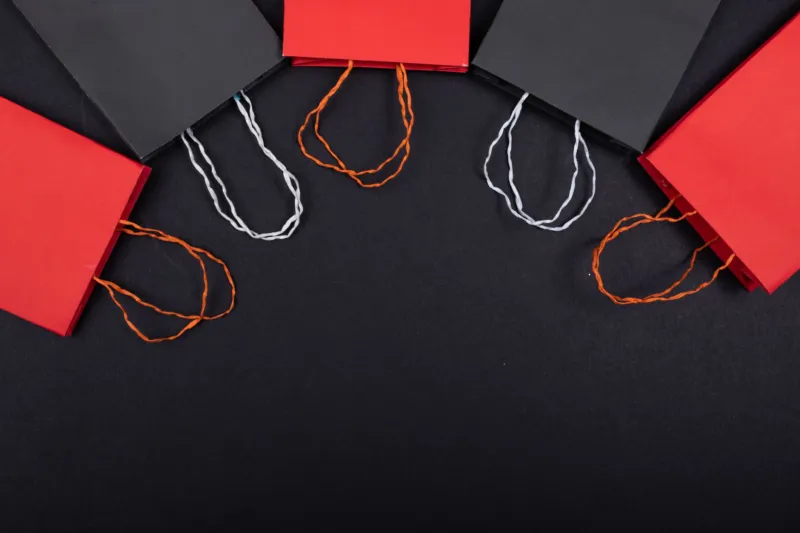
The branded tote bag sitting on a shelf in a Seoul boutique costs the equivalent of $85. It is made from waxed canvas, features a debossed logo executed with the precision of a luxury goods house, and was originally distributed as a promotional item at the launch event of a mid-sized Korean cosmetics brand. It sold out on a secondhand platform within 48 hours of being listed.
This is not an anomaly. Across East and Southeast Asia's most sophisticated consumer markets, something fundamental has changed about the relationship between brands, promotional merchandise, and the people who receive it. What was once a category defined by volume, low unit cost, and disposability has been reimagined as a vehicle for brand equity, consumer loyalty, and — increasingly — genuine retail desirability.
For American promotional distributors still calibrating their strategies around price-per-unit efficiency, this shift represents either a significant missed opportunity or an existential competitive threat, depending on how quickly they choose to engage with it.
The Anatomy of a Market Transformation
Understanding how this premiumization occurred requires looking at the specific cultural and economic conditions that shaped it.
In South Korea, the influence of the broader "K-brand" phenomenon — the meticulous attention to packaging, presentation, and brand storytelling that has defined K-beauty and K-fashion globally — has permeated the promotional products category in ways that have no direct American parallel. Korean brand managers do not think of promotional merchandise as a line item to be minimized. They think of it as an extension of the brand's physical identity, subject to the same design rigor as product packaging or retail environments.
"The concept of 'giveaway' is almost pejorative in the Korean market context," explained one Seoul-based brand consultant who has worked with both domestic conglomerates and international clients entering the Korean market. "The expectation is that a branded item should be something the recipient is grateful to own. If it isn't, it reflects poorly on the brand, not just the budget."
In Japan, the dynamic is somewhat different but equally instructive. Japan's long-standing culture of gift-giving — rooted in the concepts of omiyage (souvenir gifts) and ochugen (seasonal gifting) — has created a promotional merchandise environment in which craftsmanship, material quality, and presentation are non-negotiable. Japanese consumers are extraordinarily sensitive to the difference between an item that was thoughtfully selected and one that was merely ordered at volume. That sensitivity has trained brand marketers to source accordingly.
Singapore occupies a third position: a highly internationalized market where premium promotional goods have become a marker of corporate sophistication. In a business culture where relationships are paramount and first impressions carry lasting weight, the quality of a branded gift communicates something specific about the giving organization's standards and self-perception.
Which Product Categories Are Driving Growth
Across all three markets, certain product categories have seen disproportionate growth in their premium tier, and the patterns are worth examining closely.
Drinkware and tableware have emerged as a dominant category, driven by the intersection of sustainability messaging and lifestyle aspiration. Insulated tumblers with ceramic-coated interiors, hand-thrown ceramic mugs with subtle brand integration, and glassware sets with custom etching have replaced plastic bottles and foam cups as the preferred vehicle for brand expression in this space. Korean brands in particular have pioneered collaborations with studio ceramicists to produce limited-edition promotional tableware that functions as collectible art.
Textile goods — specifically apparel and accessories — have seen a dramatic quality elevation. The benchmark is no longer a standard cotton tee with a screen-printed logo. Premium fleece, technical outerwear, and accessories crafted from Japanese selvedge denim or Korean technical knits are appearing in promotional contexts at price points that would have been unthinkable a decade ago. The logic is straightforward: a recipient who wears a beautifully made branded jacket becomes a walking brand ambassador in a way that a disposable pen never achieves.
Tech accessories and workspace goods round out the growth picture, particularly in Singapore's corporate gifting environment. Wireless charging pads, noise-canceling earbuds with custom branding, and premium leather desk accessories have become standard at the upper tier of corporate gifting programs.
Where American Distributors Stand — and Where They're Falling Short
The honest assessment is that most American promotional distributors remain structurally oriented toward a volume-and-efficiency model that is increasingly misaligned with where the highest-margin opportunities exist — both in Asia and, notably, at home.
Several industry leaders have begun to articulate this tension openly. "We built our entire business around the idea that the client's primary concern is cost per unit," acknowledged the president of a Chicago-based distributor who has been actively restructuring his company's sourcing relationships. "That's still true for a significant portion of the market. But the clients who are willing to spend $40 or $50 per unit on something genuinely exceptional — those are the relationships that transform your business. And we weren't set up to serve them."
The structural barriers are real. American distributors have deep, optimized relationships with volume suppliers. Their internal quoting systems, margin expectations, and client communication processes are calibrated around a different price architecture. Pivoting toward premium sourcing requires building new supplier relationships — often in markets like Japan and South Korea — and developing the design fluency and quality vocabulary to have credible conversations with sophisticated brand clients.
It also requires a regulatory awareness that many distributors have not yet developed. Premium promotional goods entering the US market from Asian suppliers are subject to evolving import regulations, material safety standards, and sustainability disclosure requirements that do not apply to domestic sourcing. Understanding which certifications — OEKO-TEX, REACH compliance, recycled content verification — matter to which client segments is a baseline competency for operating in this space.
Positioning for the Premium Opportunity
For American distributors willing to invest in repositioning, the pathway is not opaque. Several early movers have already demonstrated viable models.
The most effective approach appears to involve building direct relationships with Asian manufacturers — attending regional trade events, engaging with sourcing platforms that specialize in premium goods, and investing in sample development that allows distributors to present genuinely differentiated options to clients. This requires a longer sales cycle and a different kind of client conversation, but the margin profile justifies the investment.
Equally important is the development of a design capability — either in-house or through partnerships with freelance brand designers — that allows distributors to present premium promotional concepts rather than simply fulfilling specifications. The clients who spend at premium levels are buying creative partnership as much as they are buying product.
The Asian markets that have already navigated this transition offer a genuinely useful blueprint. The lesson from Seoul, Tokyo, and Singapore is not that American brands need to adopt Asian aesthetic sensibilities wholesale. It is that the promotional merchandise category is capable of carrying far more brand weight — and commanding far higher margins — than the American market has historically demanded of it.
The distributors who internalize that lesson earliest are likely to define what premium promotional products look like in the US market over the next decade.