Eastern Europe's Quiet Rise: How Savvy US Promo Distributors Are Building Their Hidden Supplier Safety Net
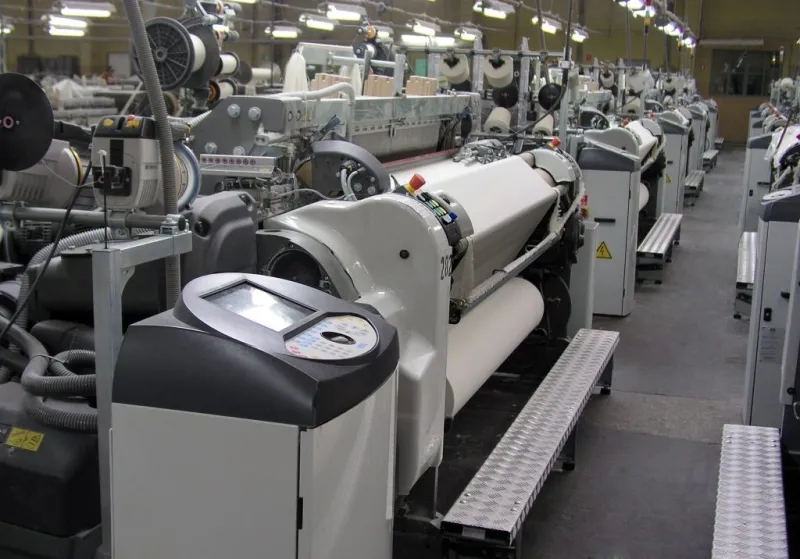
Photo: Eastern Europe manufacturing facility textile promotional products supplier warehouse Poland, via andropol.com
In the promotional products industry, supplier relationships are rarely discussed with the candor they deserve. Distributors guard their vendor networks the way restaurateurs guard their recipes—partly for competitive reasons, partly because the relationships themselves are fragile enough that public scrutiny can damage them. This culture of discretion has made it difficult to track one of the more consequential strategic shifts currently underway in the mid-market segment: the deliberate, methodical development of secondary supplier relationships across Eastern Europe.
The shift is not accidental, and it is not driven primarily by price. It is driven by risk.
The Concentration Problem Nobody Wanted to Admit
The supply disruptions that cascaded through global trade between 2020 and 2023 exposed a structural vulnerability that the promotional products industry had been carrying for years without fully acknowledging. Distributors who had concentrated their sourcing with one or two flagship suppliers—whether in Western Europe or Asia—discovered that concentration risk is not theoretical. When those suppliers faced capacity constraints, raw material shortages, or logistics failures, there was no fallback. Orders were delayed, clients were lost, and margins evaporated covering expedited alternatives.
The instinct following those disruptions was to diversify. The more sophisticated instinct—the one being acted upon by the distributors this article profiles—was to diversify strategically, building relationships with suppliers capable of serving as genuine operational backups rather than simply adding names to a vendor list.
Eastern Europe, for reasons both geographic and economic, emerged as the preferred theater for this diversification effort.
Why Eastern Europe, and Why Now
The logic behind Eastern Europe as a secondary sourcing destination for US promotional product distributors rests on several converging factors.
First, the manufacturing infrastructure across Poland, the Czech Republic, Hungary, and increasingly Serbia and Romania has matured substantially over the past fifteen years. EU membership or close trade alignment with the EU has driven investment in production standards, quality management systems, and logistics connectivity that simply did not exist in the same form a decade ago. Polish textile and promotional goods manufacturers, in particular, have invested heavily in digital printing and embroidery capacity that is directly competitive with Western European output—at price points closer to Asian alternatives.
Second, the geopolitical calculus has shifted. The concentration of sourcing in Asia—particularly China—carries a risk profile that has grown more visible and more discussed at the executive level across US distribution businesses. Eastern Europe, while not immune to geopolitical complexity, sits within a regulatory and trade framework that provides greater predictability for US importers than Southeast Asian alternatives.
Third, the lead time mathematics work differently from Eastern Europe than from Asia. Ocean freight from major Asian manufacturing hubs to US East Coast ports runs eight to twelve weeks under normal conditions—and those conditions have proven anything but reliable. Air freight from Warsaw or Prague to Chicago or Atlanta runs forty-eight to seventy-two hours. For a distributor managing a secondary supplier relationship, that responsiveness changes the operational calculus entirely.
How the Relationships Are Being Built
The distributors making progress in this space are not approaching Eastern European supplier development the way they approach flagship partnerships. The investment profile is deliberately lighter. The goal is not to replicate the depth of a primary vendor relationship but to establish enough operational familiarity that the relationship can be activated quickly when needed.
In practice, this means placing small, regular test orders—often items that do not need to hit the client floor—to validate production quality, shipping reliability, and documentation accuracy. It means maintaining communication channels that keep the supplier engaged without creating the expectation of volume commitments that the distributor cannot make. And it means attending regional trade events, including FESPA Eurasia and related exhibitions in Warsaw, Prague, and Istanbul, where Eastern European manufacturers with export capability are increasingly visible.
Several distributors interviewed for this piece described a tiered approach. Their primary supplier handles the volume. A secondary supplier—typically one with demonstrated quality and logistics capability—handles overflow and serves as a pressure valve when primary capacity tightens. A tertiary relationship, often with a smaller or more specialized manufacturer, provides access to specific product categories or finishing techniques that neither primary nor secondary suppliers can match.
The tertiary tier is where Eastern Europe's Balkan manufacturers are beginning to appear. Serbian and Croatian producers, in particular, are developing niches in embroidered textiles and leather-adjacent promotional goods that differentiate them from the broader Eastern European field.
The Leverage No One Talks About
Beyond risk mitigation, secondary supplier relationships carry a negotiating dimension that distributors are reluctant to discuss openly but acknowledge privately. The existence of a credible alternative supplier—one that a primary vendor knows about—changes the dynamics of pricing and service conversations in ways that pure volume leverage cannot.
A distributor who sources exclusively from one vendor has limited options when that vendor raises prices, extends lead times, or reduces service priority. A distributor who can credibly redirect a portion of volume to a qualified alternative has a different conversation. The secondary supplier does not need to win the business to change the economics of the primary relationship.
This leverage effect is one reason why the investment in Eastern European supplier development is often justified internally on grounds that go beyond the direct revenue those suppliers generate.
The Tradeoffs and the Honest Limitations
Eastern European secondary sourcing is not without friction. Minimum order quantities at smaller manufacturers can be higher, relative to their production scale, than US distributors accustomed to Asian volume economics expect. Quality consistency at second and third-tier suppliers requires more active management than flagship partnerships, where established systems handle much of the oversight. And the language and cultural navigation of business relationships across Poland, the Czech Republic, and the Balkans—while more straightforward than some Asian markets for English-speaking American buyers—still carries meaningful transaction costs.
The distributors who are making this work are investing in those relationships with the same intentionality they bring to their primary partnerships. They are visiting facilities, not just reviewing catalogs. They are building personal relationships with ownership and production management, not just procurement contacts. And they are treating the investment as infrastructure—something that does not pay off in the next quarter but changes the risk profile of the business over a three-to-five-year horizon.
For a mid-market promotional products distributor navigating an environment where supply chain disruption has moved from exceptional to recurring, that kind of infrastructure is no longer optional. It is the backup plan that separates resilient businesses from vulnerable ones—whether or not anyone wants to talk about it.


