The Invisible Reshoring: Mid-Market US Textile and Promo Firms Are Rebuilding Supply Chains Closer to Home—Quietly
If you were expecting press releases, you will be waiting a long time. The reshoring movement taking shape inside America's mid-market textile and promotional products sector is being conducted with a conspicuous absence of fanfare. Companies that have spent years sourcing equipment, substrates, and finished goods from European and Asian suppliers are redirecting that capital toward domestic and near-shore alternatives—and they are doing so without announcing it to their competitors, their clients, or the trade press.
The discretion is strategic. In a sector where relationships with Eurasian suppliers remain commercially significant and where clients have grown accustomed to specific price points, publicly declaring a supply chain overhaul carries risks that most operators prefer to avoid. What is emerging instead is a quiet infrastructure investment that is reshaping procurement patterns in ways that may not become fully visible for another two to three years—but whose early signals are already detectable to those paying close attention.
Why Now, and Why Quietly?
The motivations driving this shift are not new, but their convergence has reached a threshold that is compelling action at a scale not previously seen. Operators who spoke with FESPA Eurasia Insider cited three primary drivers, often in combination.
Speed-to-market pressure has intensified dramatically across both the textile and promotional products segments. The rise of on-demand and short-run fulfillment expectations—accelerated by e-commerce dynamics and the broader cultural shift toward personalization—has made ocean freight lead times from Asia increasingly incompatible with client expectations. Even air freight from European suppliers, while faster, introduces cost structures that compress margins on lower-volume orders. Domestic and near-shore sourcing, by contrast, enables production cycles measured in days rather than weeks.
Quality control complexity is a second persistent driver. Managing quality across a supply chain that spans multiple continents requires substantial investment in inspection infrastructure, sample approval processes, and remediation logistics. Several mid-market operators described situations in which quality inconsistencies from Eurasian suppliers—not severe enough to trigger formal disputes, but significant enough to require additional finishing or rework—were quietly absorbing 5 to 8 percent of gross margin on affected product lines. Bringing production closer to home, even at a higher per-unit cost, eliminated those hidden expenses.
Risk diversification has emerged as the third and, for many operators, most urgent motivation. The supply chain disruptions of the early 2020s left lasting marks on procurement philosophy across the industry. Operators who had built their businesses on the assumption of reliable, low-cost Eurasian supply found themselves exposed in ways they had not modeled. The reshoring movement is, in significant part, a risk management response—a deliberate effort to reduce concentration exposure in supply chains that proved more fragile than anticipated.
The Infrastructure Investments Being Made
The shift away from Eurasian sourcing is not merely a change in purchasing behavior. It is accompanied by capital investment in domestic production infrastructure that, in several cases, represents the most significant equipment expenditure these companies have made in a decade.
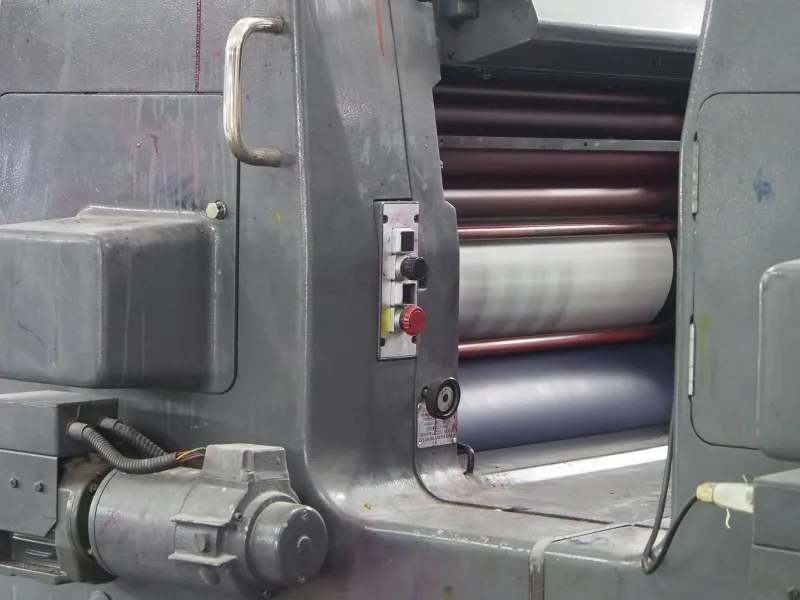
Digital textile printing capacity is a primary area of investment. Several mid-market operators have installed domestic direct-to-fabric and dye-sublimation platforms over the past 18 months, reducing their dependence on imported finished textile goods for core product lines. The equipment itself, in some cases, still originates from European manufacturers—a nuance that underscores the complexity of the reshoring narrative. What is changing is not always the equipment's country of origin but rather where the production process occurs and who controls it.
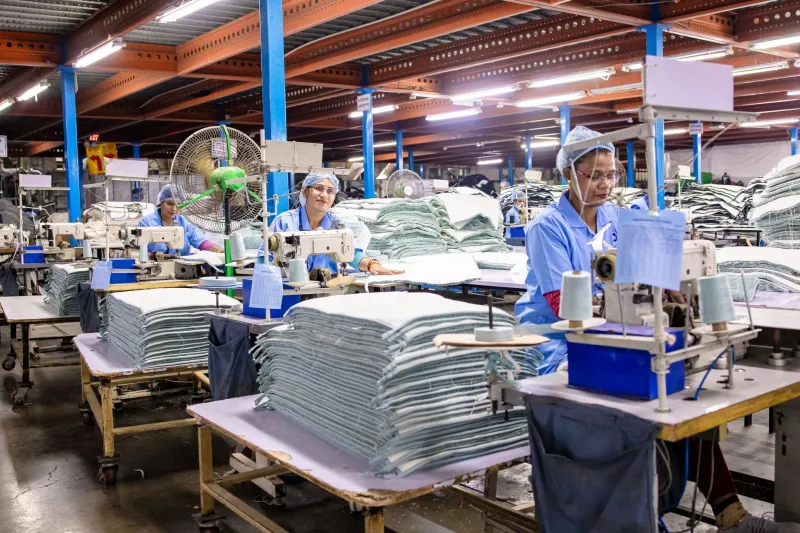
Near-shore manufacturing partnerships in Mexico and Central America are also receiving increased attention. Several US promotional products companies have established or expanded contract manufacturing relationships in these regions, citing shorter transit times, lower logistical complexity relative to Asian sourcing, and greater ease of quality oversight. These arrangements are typically structured without public announcement, framed internally as operational adjustments rather than strategic pivots.
Domestic substrate and consumables sourcing is a third area of quiet investment. Operators who previously relied on European specialty paper, Asian textile substrates, or imported ink systems are actively qualifying US-based alternatives—sometimes accepting modest performance trade-offs in exchange for supply chain reliability and shorter replenishment cycles.
What Companies Are Not Saying—and Why
The deliberate silence surrounding these transitions reflects several legitimate business considerations. Existing Eurasian supplier relationships often involve long-term contracts, volume commitments, or co-development agreements that make public declarations of supply chain redirection commercially sensitive. Announcing a reshoring initiative before the domestic infrastructure is fully operational also risks creating client expectations that cannot yet be met.
There is also a competitive dimension. In a sector where differentiation is difficult and where supply chain architecture can represent a meaningful source of competitive advantage, operators are understandably reluctant to telegraph their strategic moves to rivals. The companies building domestic capacity today are, in many cases, doing so precisely because they believe their competitors have not yet made the same investments.
What This Signals for Eurasian Trade Relationships
It would be an overstatement to characterize the current reshoring trend as a wholesale withdrawal from Eurasian sourcing. The US textile and promotional products sector remains deeply interconnected with European and Asian manufacturing ecosystems, and that interdependence will not dissolve quickly. European equipment manufacturers, in particular, continue to offer technical capabilities in certain specialty segments—digital embellishment, high-precision finishing, advanced dye-sublimation—that domestic alternatives have not yet fully replicated.
What is changing is the risk calculus that governs how US operators structure their Eurasian supplier relationships. The era of single-source, long-haul dependency is giving way to a more deliberate portfolio approach—one in which Eurasian sourcing is retained where it delivers genuine differentiated value but is no longer treated as a default.
For Eurasian equipment and substrate manufacturers seeking to maintain their position in the US market, this shift carries a clear implication: the buyers who continue to engage with them will be more demanding, more analytically rigorous, and more willing to walk away than their predecessors were. The relationships that endure will be the ones built on demonstrable, measurable performance—not on historical inertia.
The Quiet Ones to Watch
The companies leading this reshoring movement may not be generating headlines, but their decisions are laying the groundwork for a structural shift in how American textile and promotional products businesses relate to the broader Eurasian trade ecosystem. When that shift becomes visible—through capacity announcements, product line expansions, or shifts in trade data—the groundwork will already have been in place for years.
For observers of the transatlantic and transpacific print trade, the absence of noise is itself a signal worth heeding.