Showroom Perfect, Shop Floor Broken: The Uncomfortable Truth Behind Eurasian Equipment Demonstrations
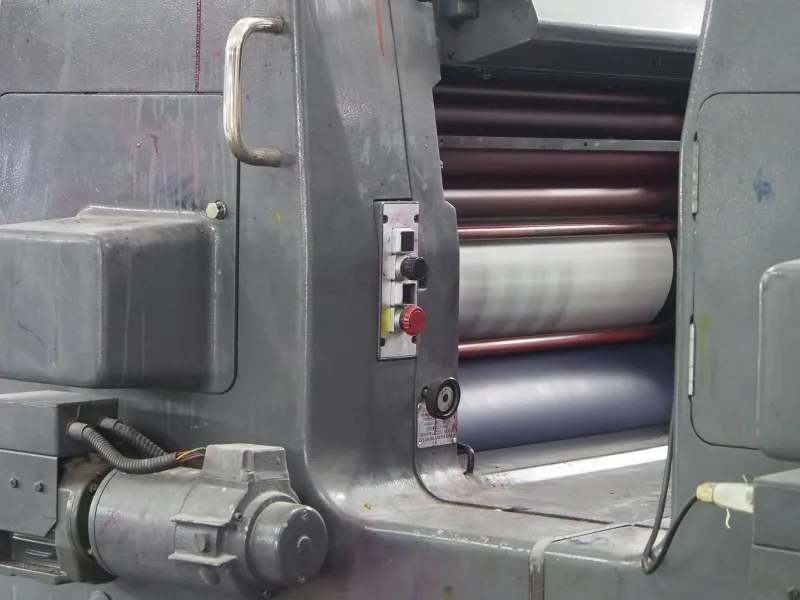
The demonstration runs without a hitch. A technician who has operated this specific press model for three years executes a substrate changeover in under four minutes. Color profiles load automatically. Registration holds tight across the full run. The assembled crowd of US buyers leans in, impressed, and the sales conversation that follows carries the full emotional weight of what they just witnessed.
Back home, in a print shop in Ohio or Texas or the Pacific Northwest, that same press behaves differently. The operator is competent but new to this platform. The substrate they run most frequently wasn't part of the demo. The color management workflow the vendor described assumes software the shop doesn't yet own. And the regional support technician, based three states away, isn't available until next week.
This is not an isolated story. It is, according to a growing number of US print shop owners and industry consultants, a defining feature of how European and Asian trade shows present equipment capability — and a significant contributor to implementation failures that rarely make it into vendor case studies.
The Architecture of a Perfect Demo
Understanding why expo demonstrations look the way they do requires understanding the considerable investment vendors make in ensuring they do. Equipment manufacturers attending major European shows such as drupa or FESPA Global Print Expo, or prominent Asian expos across Japan and South Korea, dedicate months of preparation to their show floor presence.
Dedicated demonstration machines are configured and tested exhaustively before shipping to the venue. Operators selected for show duty are among the most experienced the manufacturer employs. Substrates used in demonstrations are pre-tested and approved. Software environments are clean, optimized, and free of the legacy integrations and workarounds that characterize real production environments.
The result is a performance. Not a deceptive one, necessarily — the equipment is genuinely capable of what it demonstrates under those conditions. But those conditions bear limited resemblance to the average American print operation, and that distinction is almost never part of the sales conversation.
What US Shop Owners Are Actually Experiencing
Conversations with print shop owners across multiple US regions reveal a consistent pattern. The equipment performs, but not immediately, not without significant investment in operator training, and not without a period of production disruption that affects revenue.
One commercial print operation in the Southeast reported that a large-format hybrid press purchased following a European expo demonstration took nearly five months to reach consistent production throughput. The gap was not mechanical — the press functioned as specified — but operational. Existing staff required retraining, a new color management workflow had to be implemented, and substrate sourcing had to be adjusted to match the press's optimal input profile. None of that complexity was visible in the demonstration.
A promotional products operation in the Midwest described a similar experience with a UV flatbed unit sourced from an Asian manufacturer. The demo had emphasized the machine's versatility across rigid substrates. In practice, achieving consistent adhesion results on the specific materials the shop regularly handled required months of profiling work and several thousand dollars in test material costs.
Consultants who support US shops through equipment acquisition and implementation are direct about what they observe. The demonstration environment is engineered to minimize variables. The actual shop floor is defined by them.
Training Programs That Don't Transfer
A recurring complaint among US buyers involves the inadequacy of training programs provided by Eurasian equipment manufacturers. This is a structural problem with multiple dimensions.
Many European manufacturers offer training programs designed around European operational contexts — shop configurations, workflow software ecosystems, and regulatory environments that differ from those common in the US. Training materials, when translated, frequently carry the imprecision of documents not originally written for an American audience. And the training duration offered as standard — often two to five days of on-site instruction — is routinely insufficient for shops where the learning needs to cascade across multiple operators working different shifts.
Asian manufacturers, particularly those from markets where operator specialization is more narrowly defined, sometimes provide training that assumes a level of dedicated technical staff that smaller US operations simply don't maintain. A shop running eight to twelve employees across production and customer service functions cannot replicate the operational structure that makes a demo technician's four-minute changeover possible.
Some vendors have begun acknowledging this gap, particularly those with established US distribution networks. Extended remote support programs, video-based operator training libraries, and North American application specialists represent meaningful improvements. But availability varies significantly by manufacturer and product category, and buyers often discover the depth of support available only after the purchase is finalized.
The Consultant's View
Independent print industry consultants occupy a useful vantage point in this dynamic. They are present at expos, they work inside shops during implementation, and they are not financially aligned with equipment sales outcomes.
Their consistent observation is that the disconnect between demonstration and reality is not primarily a function of dishonesty. It is a function of incentive structure. Vendors are incentivized to present capability under optimal conditions. Buyers, energized by expo environments and eager to solve production problems, are motivated to accept optimistic projections. The friction only becomes visible after the purchase order is signed.
What consultants recommend — and what relatively few buyers do — is insisting on reference visits to US installations of the specific equipment model under consideration, ideally at shops of comparable size and with comparable substrate and workflow profiles. A reference call with a vendor-selected customer is useful but limited. An unmediated conversation with a shop owner who has run the machine for eighteen months is considerably more instructive.
Recalibrating Expectations Before the Next Show
The trade show circuit across Europe and Asia will continue to be a genuinely valuable resource for US print buyers. Equipment innovation at these events is real, and the opportunity to evaluate multiple platforms in a compressed timeframe has no domestic equivalent.
But the demonstration is a starting point, not a conclusion. Buyers who approach expo presentations as the beginning of a rigorous due diligence process — one that includes operator capability assessment, realistic implementation timelines, and honest evaluation of support infrastructure — will consistently outperform those who make decisions based on what they watched under carefully controlled show floor lighting.
The equipment can do what the demo shows. The question is whether your shop, as it currently exists, can make it do that.