Port Delays, Hidden Fees, and Broken Promises: The True Cost of Ordering Print Equipment and Substrates from Eurasia
For many American print shop owners, the math looked straightforward. A wide-format press negotiated at a favorable rate on a trade show floor in Düsseldorf or a substrate order placed with a Korean supplier following a well-attended expo presentation seemed like a clear win. Then the shipment left port — or rather, it didn't, not on schedule — and the real accounting began.
Logistics dysfunction across key Eurasian trade corridors has quietly become one of the most consequential cost factors facing US print operations sourcing equipment, consumables, and finished goods from Europe and Asia. Yet it remains a topic that vendors, freight forwarders, and trade show organizers rarely address with any candor.
What the Show Floor Doesn't Tell You
Trade expos across Europe and Asia are extraordinarily effective at one thing: creating the conditions for a confident purchase decision. Equipment gleams under purpose-built lighting. Demonstrations run flawlessly. Lead times quoted by vendor sales representatives reflect best-case scenarios, not operational reality.
What those conversations almost never include is a frank discussion of port congestion at Rotterdam, the chronic berth scheduling backlogs at Busan, or the downstream ripple effects of rail disruptions across Central Asian freight corridors — all of which directly affect when a US buyer's order actually arrives and at what final cost.
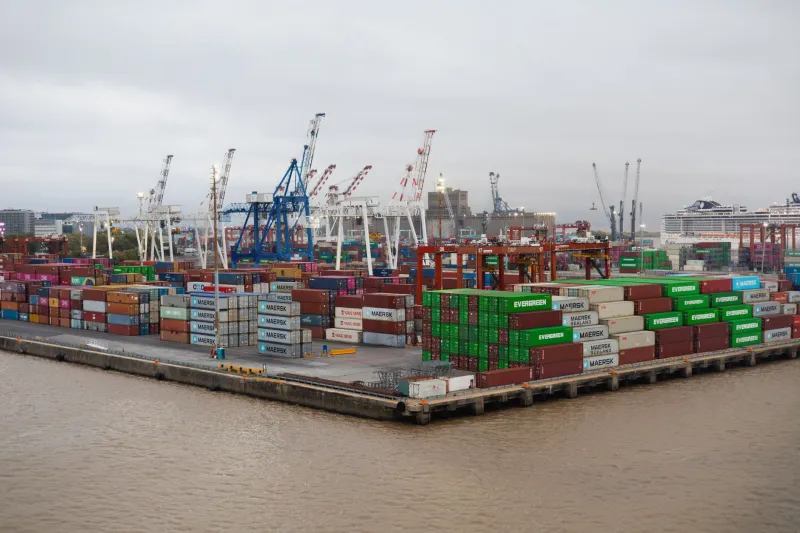
Freight consultants working with mid-size American print operations report that demurrage fees — the charges assessed when cargo containers sit at port beyond their allotted free time — have become a routine line item rather than an exception. At the Port of Los Angeles, which handles a significant share of trans-Pacific print equipment and substrate imports, average dwell times have remained elevated well above pre-pandemic norms. Buyers who structured their cash flow around a quoted six-week delivery window are routinely absorbing costs from eight- to twelve-week actual timelines.
The Corridors Under the Most Pressure
Not all Eurasian trade routes carry equal risk. US print buyers sourcing from different regions face distinctly different logistics profiles.
Northern Europe to US East Coast: This corridor, which handles a substantial volume of German and Dutch-manufactured press equipment, has been affected by persistent labor negotiations at major container terminals and seasonal port congestion. Shipments routed through Hamburg or Antwerp have shown elevated schedule reliability failures, with some equipment orders experiencing multiple rollover events — meaning containers are bumped from one vessel to the next — before securing confirmed passage.
East Asia to US West Coast: The trans-Pacific lane serving Korean, Japanese, and Chinese suppliers of substrates, inks, and finished promotional goods remains the highest-volume corridor for US print importers. It is also among the most volatile. Carrier blank sailings — instances where shipping lines cancel scheduled departures without adequate notice — have created compounding delays for buyers operating on just-in-time inventory models.
South and Southeast Asia to US: Textile substrate sourcing from India, Bangladesh, and Vietnam has grown significantly as US buyers diversify away from Chinese suppliers. These lanes, however, introduce transshipment complexity that adds both time and cost, with cargo frequently moving through intermediate hubs at Singapore or Colombo before crossing the Pacific.
Hidden Surcharges and the Fine Print Nobody Reads
Beyond demurrage, US print buyers are encountering a growing list of accessorial charges that were either absent or minimal a few years ago. Peak season surcharges applied unilaterally by carriers, emergency bunker adjustment factors tied to fuel price volatility, and port congestion surcharges at destination terminals all compound the landed cost of Eurasian-sourced goods.
Freight brokers who specialize in print industry imports note that buyers frequently underestimate the cost differential between a vendor's quoted CIF (cost, insurance, and freight) price and the actual total landed cost once US customs clearance, drayage to the final facility, and any assessed demurrage are factored in. The gap between those two figures has widened meaningfully over the past two years.
For equipment purchases, the situation carries additional complexity. Large-format presses and industrial textile machinery often require specialized heavy-lift logistics, chassis availability coordination, and in some cases, structural access modifications at the receiving facility. None of these costs appear in a trade show conversation.
What Sophisticated Buyers Are Doing Differently
A segment of more experienced US print operations has begun building logistics risk explicitly into their procurement process. Rather than accepting vendor-quoted lead times, these buyers engage freight forwarders with direct relationships at origin ports before finalizing purchase agreements, using current vessel schedule data to establish realistic delivery windows.
Some are also negotiating payment milestone structures that tie final installments to confirmed vessel loading rather than purchase order issuance — a meaningful shift in risk allocation that larger European equipment manufacturers have shown willingness to accommodate.
Consolidation purchasing is another emerging strategy. Smaller shops that previously placed individual orders are coordinating with peer operations to fill containers more efficiently, reducing per-unit freight costs and improving their standing with carriers that prioritize high-volume shippers.
A Structural Problem Without a Quick Resolution
It would be convenient to attribute current logistics dysfunction to a temporary disruption that is on the verge of resolution. The evidence does not support that optimism. Infrastructure investment at major Eurasian export ports has lagged behind volume growth for years. Carrier consolidation has reduced competitive pressure on schedule reliability. And the geopolitical complexity affecting certain Central Asian and Middle Eastern transit routes introduces a layer of unpredictability that no freight contract fully addresses.
For American print buyers, the practical implication is this: the price on a Eurasian show floor invoice is the beginning of a cost conversation, not the end of it. Building logistics reality into purchasing decisions — with specific, documented analysis of corridor risk, current dwell time data, and realistic surcharge projections — is no longer optional for operations that intend to maintain healthy margins.
The container will eventually arrive. The question is what it costs when it does.