Small Batches, Big Returns: How American Textile Makers Are Outmaneuvering Asian Volume Producers
For decades, the conventional wisdom in American textiles was straightforward and unforgiving: if you cannot compete on cost per unit, you cannot compete. Asian manufacturing—anchored by lower labor costs, vertically integrated supply chains, and government-backed industrial infrastructure—set a pricing floor that domestic mills struggled to match. The result was a well-documented contraction of US textile capacity stretching across several generations of trade policy.
But something has been shifting on the factory floors of North Carolina, South Carolina, and the textile corridors of the Pacific Northwest. A cohort of American manufacturers has stopped chasing the volume game entirely. Instead, they are engineering a different kind of advantage—one built on speed, specialization, and the kind of intimate customer collaboration that a factory in Guangdong or Dhaka cannot easily replicate from ten thousand miles away.
The Limits of Scale: Where Asian Factories Leave Gaps
Asian textile production is optimized for one thing above all else: volume. Minimum order quantities that make economic sense for a factory producing hundreds of thousands of meters become a structural liability when a US brand needs 500 custom units in three colorways, delivered in 21 days, with proprietary moisture-wicking specifications baked into the weave.
This is precisely the terrain that domestic converters are now occupying with increasing confidence. The economics of small-batch production favor proximity. There are no ocean freight lead times, no customs clearance delays, and no communication lag across time zones when a client needs to iterate on a prototype. For American print operators and promotional products distributors—who increasingly face clients demanding rapid customization and localized fulfillment—these advantages are not abstract. They translate directly into contract wins.
Consider the performance apparel segment. Brands in the athletic, workwear, and outdoor categories have been among the first to recognize that domestic sourcing for specialized fabrics can reduce total landed cost even when the per-unit mill price is nominally higher. When a California-based activewear label can receive a custom technical fabric sample within a week rather than six, the downstream value—in faster product development cycles, reduced inventory risk, and responsiveness to trend shifts—can dwarf the unit cost differential.
Sustainable Certification as a Competitive Moat
The sustainability dimension of this domestic revival deserves particular attention from operators tracking where the promotional and decorated apparel market is heading. European regulatory frameworks—including the EU's Ecodesign for Sustainable Products Regulation and extended producer responsibility mandates—are already reshaping what global brands require from their supply chains. As those brands operate in the US market, their compliance expectations are migrating westward.
US mills pursuing certifications such as OEKO-TEX, the Global Organic Textile Standard (GOTS), or Bluesign are discovering that these credentials carry commercial weight beyond the ESG reporting function. For promotional products distributors working with corporate clients who have public sustainability commitments, sourcing from a certified domestic mill is increasingly a selling point rather than a premium cost line item.
Several mid-scale American converters have restructured their production processes specifically around low-impact dyeing, closed-loop water treatment, and traceable fiber sourcing—not because regulation required it, but because the market signal was unmistakable. The clients willing to pay a modest premium for verified sustainable production are, by and large, the same clients placing the kinds of specialized, relationship-intensive orders that domestic mills are best positioned to serve.
Technology as the Great Equalizer
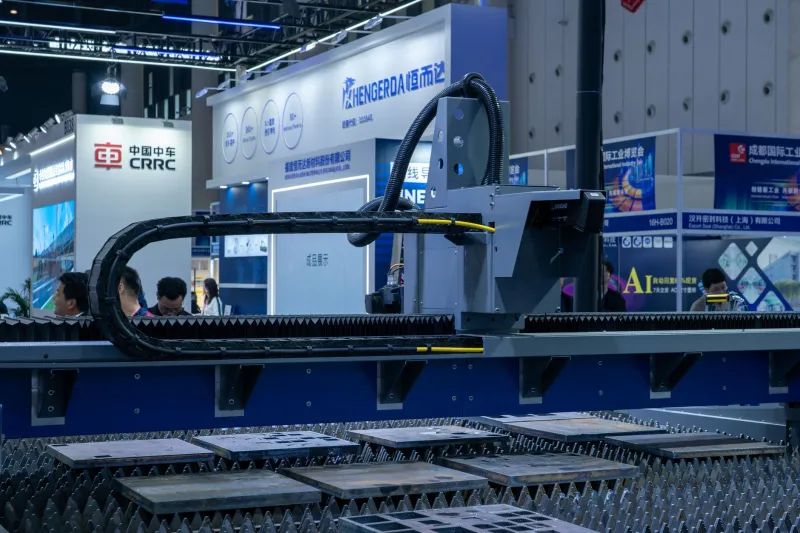
The operational transformation underpinning this niche strategy is not purely organizational—it is technological. Investment in digital textile printing, automated cutting systems, and advanced yarn engineering has allowed a new generation of American mills to achieve unit economics that would have been impossible a decade ago at low volumes.
Digital fabric printing, in particular, has been a significant enabler. Where traditional screen printing required substantial setup costs that only became viable at scale, digital workflows allow a domestic converter to produce a 200-unit run of a custom-printed technical fabric with margins that make business sense. The technology has effectively lowered the volume threshold at which domestic production becomes economically competitive—and raised the ceiling on how complex a customization request can be.
For US print operators considering how to position their own service offerings, this technological trajectory has a direct implication. Partnerships with domestic textile converters who have invested in digital production infrastructure can unlock product categories—custom-printed performance fabrics, short-run woven labels, bespoke promotional textiles—that were previously accessible only through offshore sourcing with long lead times and high minimum commitments.
Localized Innovation: A Structural Advantage
Perhaps the most underappreciated dimension of the domestic textile revival is what might be called localized innovation—the capacity to co-develop products with clients in real time, iterating on prototypes through a feedback loop that physical proximity and shared timezone make genuinely feasible.
Several US converters have formalized this capability by establishing what amount to embedded development partnerships with print operators and branded merchandise firms. Rather than functioning purely as a production vendor, these mills position themselves as technical collaborators—working with clients on fiber blends, structural properties, and finishing treatments that differentiate the final product in ways that a catalog item from an offshore supplier cannot.
This model has particular resonance in the promotional products channel, where the pressure to move beyond commodity giveaways toward genuinely distinctive branded merchandise is intensifying. A promotional item built around a custom-developed domestic fabric carries a provenance story—made in America, certified sustainable, developed specifically for your brand—that resonates with end recipients and brand managers alike.
What This Means for US Print and Promo Operators
The strategic takeaway for American print and promotional products operators is not that offshore sourcing is obsolete—it plainly is not, and for high-volume commodity production it remains cost-effective. The more precise insight is that the competitive map has been redrawn, and domestic sourcing now occupies a segment of that map where it can genuinely win.
Operators who build relationships with specialized domestic converters today are positioning themselves to serve the clients—and capture the margins—associated with custom, sustainable, and rapid-turnaround textile production. Those who treat sourcing as a purely transactional cost-minimization exercise may find themselves structurally excluded from the fastest-growing and most margin-rich segments of the decorated and promotional apparel market.
The American textile turnaround is not a sentimental story about bringing jobs home. It is a market reality being driven by clients who need things that volume factories cannot provide. For operators paying attention, the niche is wide open.