Reading the European Show Floor: What Drupa and Its Peers Are Signaling About US Print's Next Two Years
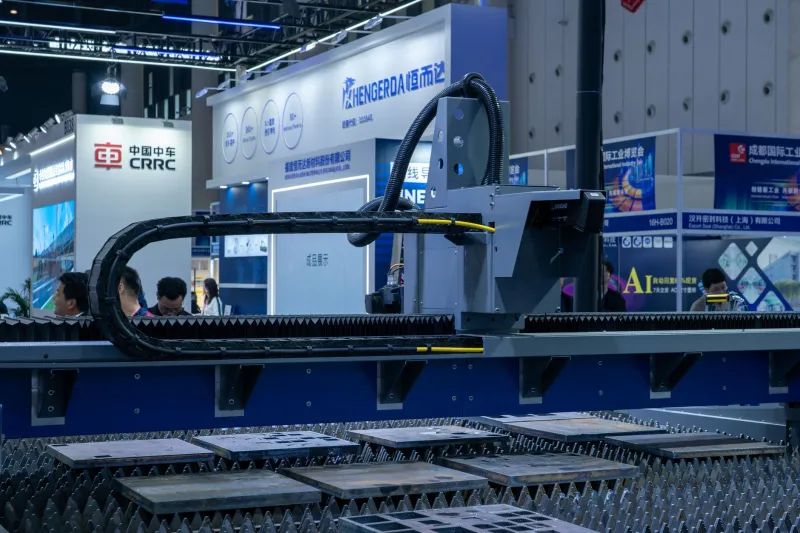
There is a well-established pattern in the global printing industry: technologies that generate significant floor traffic at European trade exhibitions tend to appear in North American commercial deployments approximately 12 to 24 months later. The lag is not accidental. It reflects the structure of the industry's innovation pipeline—where European equipment manufacturers and early-adopting Continental printers function as a proving ground, and US operators, watching from across the Atlantic, make adoption decisions informed by what has already been stress-tested in the market.
For American printers and print-adjacent operators, this dynamic represents both an intelligence opportunity and a strategic obligation. The question is not simply what was shown at Drupa or at the Sign & Print expos cycling through European trade calendars—it is what those exhibitions reveal about which technologies have crossed the threshold from prototype to commercial viability, and which are still performing for the cameras.
The European Show Circuit as a Leading Indicator
Drupa, held in Düsseldorf and widely regarded as the industry's most authoritative global platform, operates on a four-year cycle that gives each edition an outsized significance. The most recent iteration drew significant attention to three converging themes: the industrialization of inkjet across previously offset-dominated segments, the integration of artificial intelligence into prepress and workflow automation, and a marked acceleration in sustainable substrate development driven by European regulatory pressure.
Each of these themes carries a different probability of near-term US relevance, and conflating them as equally imminent would be an analytical error.
The industrialization of high-speed inkjet in commercial print—particularly in the book, direct mail, and transactional segments—is not a forecast. It is a present reality in Europe that has already begun migrating to US operations. What the most recent European show floor made clear, however, is that the next phase of this migration will involve packaging and label production, where inkjet's variable-data capabilities and improving substrate compatibility are creating displacement pressure on conventional flexographic and offset workflows. US packaging converters who have not yet modeled the total cost implications of inkjet integration are running behind the curve.
AI in Prepress: Distinguishing Deployment from Demonstration
Artificial intelligence integration in prepress and color management generated some of the highest booth traffic at recent European exhibitions—and also some of the most carefully managed demonstrations. The distinction matters enormously for US operators trying to assess investment timing.
What is genuinely deployable today, based on what European early adopters have reported through the post-show circuit, is relatively well-defined: AI-assisted preflight and error detection, automated color correction and profile matching, and intelligent job scheduling that optimizes press utilization across variable workloads. These applications are not speculative—they are in production use at European commercial printers and are delivering measurable efficiency gains.
What remains in the demonstration phase—impressive on a show floor, less proven in a production environment—includes fully autonomous layout generation, real-time press parameter adjustment without operator oversight, and AI-driven customer-facing design tools that bypass skilled prepress entirely. US operators who invest heavily in the latter category on the basis of exhibition presentations may find themselves ahead of where the technology's reliability actually sits.
The practical guidance here is to request production reference data, not demonstration footage, from any vendor making AI-centric claims. European printers who have deployed these tools operationally are generally willing to share performance benchmarks, and those benchmarks are a more reliable investment signal than any trade show keynote.
Sustainable Substrates: Regulation-Driven, Not Market-Driven—For Now
The most consequential long-term signal coming out of the European print show circuit is also the one most directly tied to regulatory dynamics rather than pure market demand: the rapid development and commercial rollout of sustainable substrates, including recycled-content papers, bio-based films, and plastic-free laminate alternatives.
In Europe, this development is being accelerated by legislation. The EU's Packaging and Packaging Waste Regulation, combined with extended producer responsibility frameworks operating at the national level across multiple EU member states, has created a hard commercial incentive for European printers and their brand clients to qualify and adopt compliant substrate alternatives. The show floor reflects this: sustainable substrate innovation was not a niche exhibitor category at recent European expos—it was a mainstream product line for major suppliers.
For US operators, the immediate regulatory pressure is lower. But the supply chain implication is significant and often overlooked. Many of the global brand clients that American printers serve are simultaneously operating in European markets where these substrates are becoming standard. As those brands consolidate their procurement and design standards globally, the sustainable substrate specifications being normalized in Europe will migrate into US supplier requirements—likely within the 12 to 24-month window that the European show-to-US-adoption pattern suggests.
US printers who begin qualifying sustainable substrates now—running test jobs, calibrating profiles, training press operators—will be in a position to respond immediately when those brand requirements arrive. Those who wait for a formal client request may find themselves in a compressed qualification timeline that creates operational risk.
Soft Signaling: What the Booth Footprints Reveal
Beyond the specific technologies on display, experienced trade show analysts often derive as much intelligence from structural observations as from product announcements. At recent European print exhibitions, several structural signals are worth noting for their US implications.
First, the consolidation of major equipment vendors around platform-based software ecosystems—rather than standalone hardware—is accelerating. The message being delivered to European printers, increasingly explicitly, is that future competitive advantage will reside in workflow integration and data utilization rather than press specifications alone. US operators accustomed to evaluating investments primarily on output quality and speed metrics should begin incorporating software ecosystem compatibility into their procurement criteria.
Second, the growing presence of Asian equipment manufacturers—particularly from China and South Korea—at European exhibitions signals a competitive dynamic that will reach the US market. These vendors are no longer positioning themselves as budget alternatives; several are presenting equipment with specifications and finishing capabilities that directly challenge established European and Japanese brands. US distributors and operators should be tracking this competitive pressure, as it will affect pricing and feature development across the board.
Actionable Priorities for US Operators
Translating European show intelligence into US investment decisions requires a disciplined filter. Not every innovation gaining traction in Frankfurt or Amsterdam will find an equivalent market in Atlanta or Chicago—regulatory environments differ, client bases differ, and the economics of specific print segments vary meaningfully across the Atlantic.
With that caveat stated, three investment areas stand out as warranting near-term attention based on the current European signal set: inkjet packaging and label capability for converters not yet positioned in that segment; AI-assisted workflow tools with demonstrated production references rather than demonstration-only track records; and sustainable substrate qualification programs for any operation serving global brand clients.
The European show floor does not predict the US market's future with certainty. But for operators willing to read it carefully, it offers something valuable: time. Time to evaluate, prepare, and position before the wave arrives rather than after.