Buyer Beware: The Shadow Market for Eurasian Print Equipment Is Costing American Shops More Than They Know

When a mid-sized commercial print shop in the Dallas–Fort Worth area purchased what appeared to be a fully functional wide-format UV printer through an online reseller, the price seemed almost too reasonable to question. The machine carried familiar branding, arrived with documentation that looked authoritative, and performed adequately during the first few weeks of operation. Then the print heads failed. The manufacturer's authorized US distributor confirmed what the shop owner had feared: the unit was a gray-market import, never registered through official channels, and ineligible for any warranty service or factory-certified parts replacement.
That scenario is no longer an isolated incident. Across the United States, print and textile shop operators are encountering a growing shadow economy of Eurasian printing equipment—machines that originate in European or Asian factories but travel to American buyers through informal, unauthorized, or outright counterfeit supply chains. The consequences extend well beyond a single repair bill.
What Defines Gray-Market and Counterfeit Equipment?
The distinction between gray-market and counterfeit equipment is important, though both categories present serious risks. Gray-market equipment refers to genuine products manufactured by legitimate brands but imported and sold outside the manufacturer's authorized distribution network. These machines may be entirely functional, but they are typically sold without the regional warranties, firmware configurations, or technical support agreements that accompany authorized sales. Counterfeit equipment goes a step further: it involves hardware that mimics the appearance of a recognized brand but is built with substitute components, often to significantly lower tolerances.
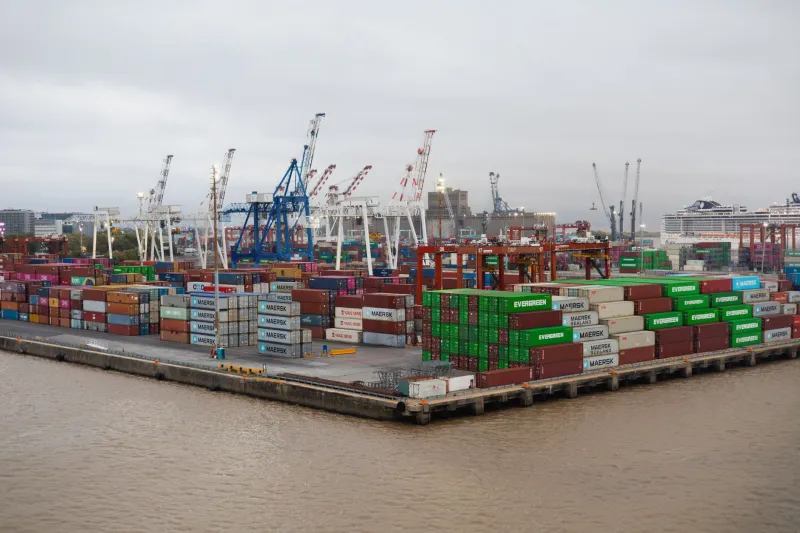
Both types are entering the US market through overlapping channels. Third-party resellers operating on major e-commerce platforms, informal brokers advertising through industry forums, and even some trade show exhibitors operating without verifiable distributor credentials have all been identified as conduits. The FESPA Eurasia trade ecosystem—which spans manufacturing hubs from Germany and the Netherlands to South Korea and China—produces enormous volumes of equipment, and the complexity of those supply chains creates opportunities for diversion at multiple points.
The Reseller Loophole
One of the most common entry points for unauthorized equipment is the secondary reseller market. A legitimate piece of European or Asian printing hardware may change hands two, three, or even four times before reaching a US buyer. At each transfer, documentation can be altered, warranty registration numbers can be obscured, and the provenance of the machine becomes increasingly difficult to verify.
Some resellers operate in good faith, unaware that the equipment they are moving was never authorized for the North American market. Others are fully aware of the product's status and rely on buyers' unfamiliarity with regional distribution agreements to complete the sale. Either way, the US shop owner bears the risk.
The challenge is compounded by the fact that gray-market machines often appear identical to their authorized counterparts. Firmware may be region-locked in ways that are not immediately apparent, ink system configurations may differ from the North American specification, and voltage or power requirements may be incompatible with US electrical infrastructure without modification—modifications that can void any remaining claim to manufacturer support.
When the Machine Fails
The true cost of gray-market or counterfeit equipment rarely becomes apparent at the point of purchase. It surfaces weeks or months later, typically at the worst possible moment: during a high-volume production run, ahead of a client deadline, or when a critical component reaches the end of its service life.
Authorized service technicians in the US are often contractually prohibited from servicing gray-market units, leaving shop owners to seek out independent repair professionals who may lack access to genuine replacement parts. In the counterfeit equipment category, spare parts may not exist at all in the North American supply chain, requiring international sourcing with lead times that can stretch from weeks to months.
Downtime is the most immediate financial consequence, but it is rarely the only one. Client relationships suffer when delivery commitments cannot be met. Insurance claims related to equipment failure may be denied if the machine is found to be operating outside its certified specification. And in cases where counterfeit equipment causes electrical or fire-related incidents, liability exposure can be substantial.
How to Protect Your Operation
Verification, while not foolproof, remains the most effective defense. Before completing any equipment purchase from a non-primary source, US buyers should request the manufacturer's official distributor list for North America and confirm that the seller appears on it. Serial numbers should be verified directly with the manufacturer, and buyers should insist on documentation that traces the machine's chain of custody from the factory.
For equipment sourced through trade shows—including events operating under the broader FESPA and Eurasia trade networks—buyers should exercise particular caution with exhibitors who cannot provide verifiable distributor credentials or who offer pricing that falls significantly below the authorized market rate. A discount of 20 to 30 percent below standard market pricing is frequently cited as a threshold that warrants heightened scrutiny.
Industry associations including the Specialty Graphic Imaging Association (SGIA) and the Promotional Products Association International (PPAI) have begun issuing guidance on gray-market risks, and several major equipment manufacturers have established dedicated hotlines for buyers to verify product authenticity before completing a purchase.
The Broader Market Signal
The growth of the gray and counterfeit equipment market is, in part, a symptom of the genuine pricing pressure that US print shops face when evaluating Eurasian capital equipment. When authorized pricing feels out of reach, the appeal of an informal channel becomes easier to understand. Manufacturers and their US distribution partners would do well to recognize this dynamic and consider whether current pricing structures are inadvertently driving buyers toward risk.
For now, the responsibility falls disproportionately on buyers. In a market as dynamic and globally interconnected as print and textile production, due diligence is not a bureaucratic formality—it is a core component of sound capital investment strategy. The machine on your production floor is only as good as the support infrastructure behind it.